The Toyota Hilux has been the undisputed king of tough pickups for decades, powering everything from remote farms to extreme off-road expeditions across the globe. For 2026, Toyota’s ninth-generation Hilux steps up with a bolder redesign, electrified options, and smarter tech that keeps its legendary durability while embracing the future. Unveiled in November 2025 at the Thailand Motor Expo, this mid-size workhorse promises to blend old-school grit with new-age efficiency. But with rivals like the Ford Ranger closing in, does the Hilux still rule the roost? We’ve rounded up the latest details on pricing, specs, and features from global sources to find out.
Exterior Design: Rugged Evolution with a Modern Muscle
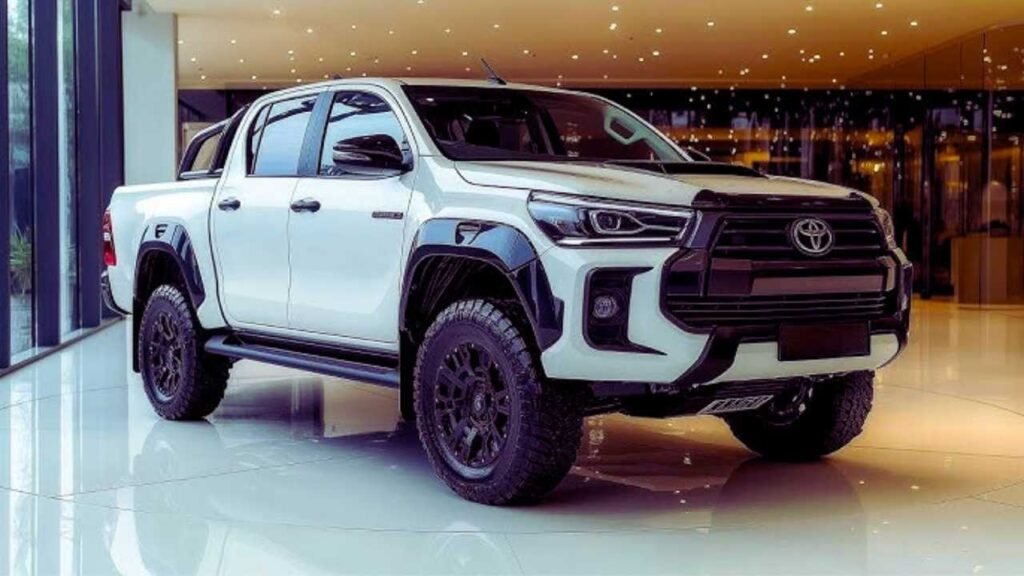
The 2026 Hilux sticks to its ladder-frame roots but amps up the aggression with sharper lines inspired by the Tacoma and Land Cruiser. At about 5.3 meters long (double-cab style), it features a squared-off front grille with slim C-shaped LED daytime running lights and a prominent “TOYOTA” badge in piano-black trim. The sides get aerodynamic flares over the wheel arches, 18-inch alloys on higher trims, and a tougher stance with 235mm ground clearance for tackling rough terrain.
- Subtle aero tweaks, like redesigned bumpers and side steps, improve fuel flow without sacrificing that unmistakable ute profile.
- New colors such as Emotional Red and Underground Grey join classics like High Arctic White, giving it global appeal from Aussie outback to African savannas.
It’s not a total overhaul, but the updates make it look fresher on the road—still tough enough for a Top Gear torture test, yet refined for urban commutes.
Interior: Tech-Forward Cabin for Work and Play
Hop inside the double-cab (now the go-to body style in most markets, with single-cab options lingering in places like Australia), and the Hilux feels worlds away from its spartan past. Dual 12.3-inch screens dominate the dash—a digital gauge cluster and infotainment hub running Toyota’s latest system with wireless Apple CarPlay, Android Auto, embedded nav, and over-the-air updates. The center console gets an angular redesign with dual gloveboxes, USB-C ports galore, and ergonomic seats wrapped in durable cloth or optional leatherette.
- Rear passengers score air vents and up to 980 liters of cargo space with seats folded, making it family-friendly for long hauls.
- Noise insulation and a quieter cabin reduce fatigue, with ambient lighting and a flat floor adding a premium vibe to base models.
Globally, it’s tuned for diverse needs: more storage for fleet users in Asia, premium touches for European buyers. No more dated plastics—this cab is built to impress without the luxury tax.
Engine and Performance: Diesel Dominance Meets Electric Ambition
Powertrains stay true to the Hilux’s work ethic, led by the familiar 2.8-liter turbo-diesel four-cylinder churning out 150kW (201 hp) and up to 500Nm of torque—enough for a 3,500kg braked towing capacity and 1,000kg payload. Paired with a six-speed manual or 10-speed auto, it hits 0-100 km/h in about 10 seconds, with mild-hybrid assist on select variants boosting efficiency by up to 7% (around 8L/100km combined). Petrol fans get a 2.7-liter naturally aspirated option in some regions, but diesel rules the volume.
- The big news: A battery-electric Hilux (BEV) debuts in early 2026 with dual motors, full-time 4×4, and an estimated 300-400km range—aimed at fleets but with off-road chops intact.
- Hydrogen fuel-cell version slated for 2028, pushing Toyota’s multi-pathway strategy for zero-emissions without ditching the diesel roar.
Ride-wise, reworked TNGA-F platform suspension smooths out highways while locking in for trails, with crawl control and multi-terrain select keeping it unstoppable. It’s a global champ: torquey for Thai highways, efficient for Euro regs.
Trims and Pricing: Accessible Toughness Worldwide
Toyota’s keeping the lineup straightforward with five core grades—WorkMate, SR, SR5, Rogue, and Rugged X—across cab-chassis, extra-cab, and double-cab bodies in 4×2 or 4×4 configs. Pricing varies wildly by market, but expect value that undercuts flashier rivals.
- WorkMate: Starts at around $28,000-$34,000 USD (e.g., $33,990 AUD before on-roads for 4×2 manual diesel), with basics like seven-inch digital cluster and Toyota Safety Sense.
- SR5/Rogue: $40,000-$50,000, adding 12.3-inch screens, adaptive cruise, and leather accents.
- Rugged X/GR Sport: Tops $55,000-$60,000 for off-road extras like all-terrain tires and locking diffs; BEV variants push toward $80,000-$95,000 for fleets.
In the US (where it’ll badge as Tacoma sibling), entry is $30,000; Europe sees hybrids from €35,000. Financing perks like low-interest fleet deals make it a no-brainer for businesses everywhere.
How It Stacks Up Against the Competition
The Hilux faces stiff global tussles, but its blend of reliability and now electrification gives it an edge. The Ford Ranger offers similar diesel grunt (2.0L bi-turbo, 154kW) and starts at $32,000 USD, but trails in resale value and lacks a BEV yet. Ford’s more agile on-road, though the Hilux wins for proven toughness in emerging markets.
Isuzu D-Max matches the 3,500kg tow with a frugal 3.0L diesel, priced from $28,000, but skimps on tech—no 12-inch screens or advanced driver aids. VW Amarok brings premium Euro flair and a V6 option, but at $45,000+, it’s pricier without the Hilux’s bulletproof rep.
In Asia and Africa, where Hilux owns 40% market share, nothing touches its service network. Bottom line: It’s the value king for fleets, edging the Ranger on longevity and the D-Max on features.
Pros and Cons
Pros:
- Unmatched global reliability with diesel torque that hauls like a beast.
- EV and hybrid options future-proof it for eco regs without losing off-road cred.
- Loaded tech and safety at prices that beat most rivals.
Cons:
- No major power bump—feels evolutionary, not revolutionary for speed demons.
- BEV range and pricing still fuzzy for non-fleet buyers.
- Double-cab focus axes single-cab fans in some spots.
Conclusion
The 2026 Toyota Hilux isn’t reinventing the wheel—it’s reinforcing it with smarter tech, greener power, and that unbreakable spirit that’s conquered continents since 1968. From diesel workhorses towing trailers in Texas to silent BEVs zipping Australian mines, it adapts to whatever you throw at it, all while keeping costs grounded. If you’re after a pickup that’s as versatile as your lifestyle, this Hilux delivers the goods globally. Hit dealerships starting December 2025 in key markets—don’t sleep on test-driving one before the rush.
FAQs
Q: When does the 2026 Hilux go on sale globally?
A: Diesel models launch December 2025 in Australia and Asia, with wider rollout in early 2026; BEV follows mid-2026, and US/Europe by spring.
Q: Is the electric Hilux suitable for off-road?
A: Yes—dual-motor 4×4, body-on-frame build, and terrain modes keep it trail-ready, though it’s fleet-focused with shorter routes in mind.
Q: What’s the fuel economy like?
A: Diesel mild-hybrids hit 7-8L/100km combined; petrol around 10L; BEV offers 300+ km range, cutting emissions for urban fleets.
Q: Does it have a warranty upgrade?
A: Standard five-year/unlimited km globally, with eight-year/160,000km on hybrid batteries—Toyota’s reliability shines through.
Q: Can I still get a manual transmission?
A: Absolutely, on base diesels for that classic Hilux feel; autos dominate higher trims for effortless towing.